Back to Blogs
July 6th, 2026
How Fleet Dash Cams Provide Iron Clad Evidence Against Distracted Vacation Drivers


Categories
For most of the year, the fleet dash cam mounted behind your windshield is a quiet insurance policy. You install it, you forget about it, and you hope that you never have to pull a single second of video footage from it.
In July, that calculation changes completely.
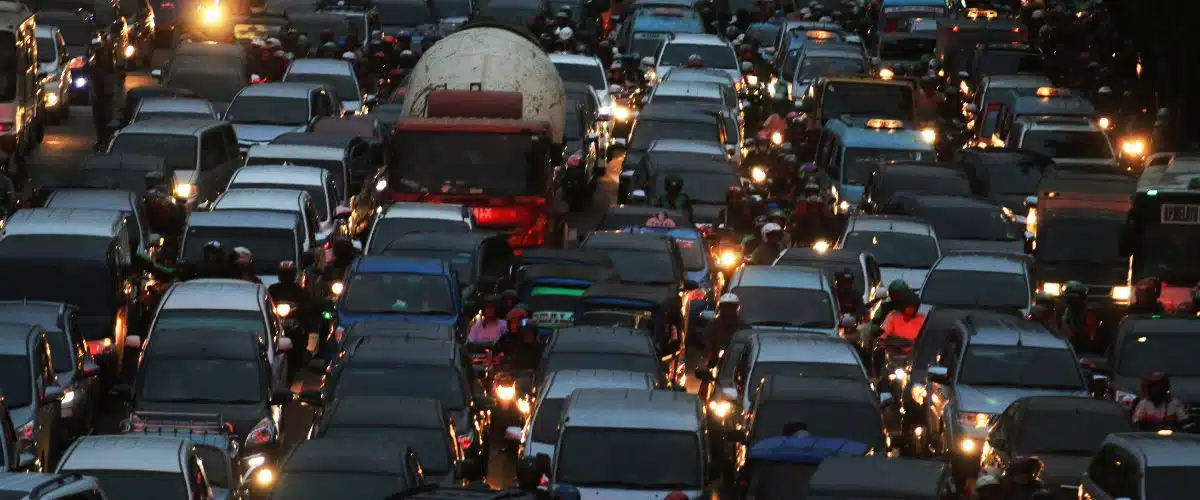
During the first 2 weeks of July, AAA projects 72.2 million Americans will travel 50 miles or more from home, with more than 61 million of them behind the wheel — the highest road-travel volume on record. Your field technicians, delivery drivers, and service crews are not taking the week off. They are merging onto the same interstates in branded commercial vehicles, surrounded by drivers whose behavior looks nothing like the safe driving habits that your team is trained on.
The vacationer in the next lane is reading a GPS screen in an unfamiliar city. The minivan ahead is full of kids and the driver is turned halfway around. The driver of the pickup behind you has been on the road for nine hours, fueled by gas-station coffee. AAA’s own crash analysis finds nearly one in three summer traffic deaths involves an impaired driver.
Your driver did everything right and they still got hit. Without fleet dash cam footage, the story of what happened belongs to whoever talks to the police officer first.
That is the entire case for a fleet dash cam system — and in the summer travel surge, the case has never been stronger.
July Is the Highest-Risk Month on the Calendar
The summer spike is not just a feeling. It’s in the federal data.
NHTSA’s quarterly fatality estimates show the third quarter — July, August, and September — consistently records more traffic fatalities than any other quarter. The reasons are structural: more vehicles, more miles, more inexperienced drivers, and more people on roads that they’ve never driven before.
This window of time even has a name. AAA calls the roughly 100 days between Memorial Day and Labor Day the 100 Deadliest Days, because more than 30% of fatal crashes involving teen drivers happen in that stretch. Here is the part that matters most for fleet managers: AAA is blunt that those hurt in these crashes are frequently not the at-fault drivers. They’re passengers, occupants of other vehicles, cyclists, and pedestrians — the road users sharing the asphalt with everyone else, including your crews.

Layer distracted driving on top of the seasonal surge and the threat sharpens. NHTSA attributes 3,208 deaths in 2024 to distracted driving, and the agency estimates that 18 people are injured in distracted-driving crashes every half hour and one is killed roughly every two and a half hours. Even as phones-down enforcement campaigns ramp up every April, the behavior is moving the wrong way: NHTSA’s roadside observation survey, analyzed by the National Safety Council shows the share of drivers actively manipulating a handheld device jumped 104% between 2015 and 2024 — from 2.2% to 4.5% of drivers at any given moment.
Put plainly: more people are staring at screens while driving than a decade ago, and most of them are doing it during the busiest and most chaotic weeks of the year. Your technician is sharing the road with every one of them.
Bigger Vehicles Get the Blame, but Data Disagrees
Here is the uncomfortable reality of being a commercial fleet driver on a crowded summer highway: when a passenger car collides with a branded truck or van, the assumption — at the scene, in the news, and often in the courtroom — is that the professional vehicle must have been at fault.
The most comprehensive federal study ever conducted on the subject says otherwise. In the FMCSA’s landmark Large Truck Crash Causation Study, researchers examined two-vehicle crashes between a large truck and a passenger vehicle and assigned each a “critical reason” — the agency’s term for the action or inaction that immediately triggered the crash. The critical reason was assigned to the passenger vehicle, not the truck, in 56% of those crashes. The study also found that passenger-vehicle drivers brought alcohol, illegal drugs, and fatigue to the crash scene at dramatically higher rates than the commercial drivers did.

The car is more often the trigger. The truck more often gets the blame. For commercial trucks especially, sheer size invites blame that the data doesn’t support.
This is the gap a fleet dash cam system exists to close because video footage doesn’t take sides. It doesn’t get rattled at the scene, it doesn’t change its story, and it doesn’t care whose vehicle is bigger. When your driver is exonerated by clear footage instead of an argument, a six-figure liability exposure becomes a closed file.
In a he-said-she-said situation, the commercial vehicle loses by default. Reliable evidence is how you stop defaulting.
Five Benefits of a Fleet Dash Cam in Summer Traffic
The best fleet dash cam solution isn’t just one lens pointed at the road — whether you run single forward-facing dash cams, dual-facing cameras, or full multi-camera rigs, a modern fleet dash cam system is a connected platform doing four distinct jobs at once.
1. Unblinking Witness
The foundational job is documentation. A forward-facing dash cam system recording video continuously gives you a time-stamped account of the road ahead — the single most valuable asset you can hand an insurer or a defense attorney after a summer collision.
Reliable evidence always beats reconstruction. Skid marks and witness memories degrade; clear footage of a distracted vacationer drifting into your lane does not. The goal isn’t to surveil your people — it’s to protect drivers. When one of them is hit by someone who shouldn’t have been on the road, you can exonerate drivers on the spot and shut down false claims before they snowball into insurance claims or litigation.
A fleet dash cam that records to an onboard SD card and auto-uploads critical clips to the cloud means that the fleet dash cam footage survives an accident, even when the vehicle doesn’t.
2. Seeing Threats Before They Become Collisions
A passive recorder tells you what already happened. An AI fleet dash cam helps prevent it.
Modern systems use computer vision and edge computing — processing video right inside the cab in real time, rather than waiting to upload it. This is the advanced driver assistance systems advantage: lane-departure warnings that flag lane drifting, tailgating alerts when following distance gets too tight, and object detection that catches a driver reaching for a phone. When the system sees a threat, it fires in-cab alerts that gives your driver the half-second of warning that prevents the crash.
In summer traffic, this edge matters — and those in-cab alerts work alongside the road-facing fleet dash cam, which is recording everything ahead. So when the distracted vacationer who suddenly brakes, or the tourist who cuts across three lanes for an exit, causes a collision, the erratic behavior of the other vehicles is already captured in the footage. The alerts keep your driver sharp; the road camera makes sure the other driver’s mistake is on the record — captured as it unfolds.
3. Coaching Loop — Where Video Becomes Behavior
This is the job many fleets get wrong, and the data on it is clear.
A fleet dash cam that no one reviews is just a more expensive way to record your own liability. The value isn’t the hardware — it’s what you do with the video data. The FMCSA’s own naturalistic-driving research found that combining onboard video monitoring with driver feedback and coaching cut safety-related events by 52.2% per 10,000 miles, and reduced the most severe events by as much as 59.1%.

But buried in that same study is the finding that should reshape how you buy: the in-cab monitor’s warning light alone, and coaching sessions that didn’t include the video, were not enough to meaningfully reduce events. Video was the active ingredient. The fleet dash cam plus the conversation is what improved driver safety — not the camera by itself. Used this way, video-based coaching helps improve safety for every fleet driver that shares the highway with other motorists.
That’s the role of a driver-facing camera. Paired with safety scoring, it surfaces the exact moments that are worth coaching — harsh braking, hard acceleration, following too close, signs of distraction — and turns those risky behaviors into a short, concrete review. Done right, this isn’t spying. It’s video telematics that support driver coaching with objective evidence of what nearly went wrong, so you can coach drivers on real driver behavior and build safer driving habits before the summer surge punishes the gap. The system that flags one driver’s unsafe driving behavior is the same system that defends the driver who did nothing wrong — coaching and exoneration run on the same footage.
The AI matters here because distraction is hard to catch any other way. Commercial drivers are 23 times more likely to be involved in a safety-critical event while texting, according to the Virginia Tech Transportation Institute research that prompted the federal texting ban. A driver-facing AI camera can flag and alert the driver about unsafe driving in real time. This is a better alternative than discovering the video in the crash footage and revealing how driver performance quietly slipped before the impact.
4. Clear Footage When the Lights Go Out
Summer evenings are long, and so is the risk exposure. California’s distracted-driving crash data pinpoints the peak window for fatal distracted crashes between 6 p.m. and 9 p.m. — exactly when families are driving home from the lake, the cookout, and the fireworks.
A camera that produces a washed-out blur after sunset is worthless in the hours that matter most. High-quality infrared and night-vision cameras let the system capture clear footage in low-light conditions, so the record of an 8:45 p.m. collision is as usable as one shot at noon. Because the backup battery keeps the fleet dash cam capturing events even while the vehicle is parked overnight, the coverage doesn’t clock out when your crew does.
Insurance Math Many Fleets Miss

Every collision your fleet dash cam system helps prevent is an insurance claim that is never filed. A sustained reduction in unsafe driving is what underwriters reward with lower insurance premiums. Fleets that can walk into a renewal with video data, safety scores, and a documented driver coaching program negotiate with evidence instead of promises. Your fleet dash cam footage that exonerates drivers keeps not-at-fault claims off your loss history entirely.
Lower insurance costs, fewer payouts, and less downtime stack up fast: the same connected camera that protects drivers also helps reduce costs across the whole operation, lifts fleet safety, and feeds the operational efficiency that you’re already chasing with GPS tracking and routing tools.
Before You Roll Out Fleet Dash Cameras: Rules You Need to Know
A fleet dash cam program done carelessly creates as much legal exposure as it resolves. You need to get these right before deployment.
There is no federal mandate — but there are mounting rules. The FMCSA does not require dash cams on commercial fleets. It does, however, regulate where you can put them. Under 49 CFR §393.60(e), a windshield-mounted device cannot obstruct the driver’s view, and “vehicle safety technology” — a definition the agency expanded to explicitly include camera systems and video event recorders — must stay within defined boundaries near the wiper-swept area and outside the driver’s sight lines to the road, signs, and signals. A camera that blocks the road is a violation waiting to be written.
Audio recording is its own legal question. Many states require the consent of all parties before audio can be recorded. A driver-facing fleet dash cam that captures sound can run headfirst into those eavesdropping and wiretapping statutes. Know your jurisdiction’s laws before you enable audio recording.
Driver-facing video rules vary by location. In-cab monitoring is governed by a patchwork of state and local laws, and what’s routine in one state may require notice, consent, or policy disclosures in another. This is a question for your counsel, not a setting you flip on by default — especially for fleets crossing state lines all summer.
Documentation is defense. The same logic that drives nuclear verdicts in ordinary accident cases now extends to your safety program. An auditable record — clear footage, a documented coaching process, a compliant rollout — demonstrates that a fleet that took its duty of care seriously. The absence of one tells a jury a very different story.
Fleet Dash Camera Is Only as Smart as the Platform Behind It
The footage that clears your driver is only useful if you can find it, retrieve it, and act on it fast. The coaching that cuts your safety events in half only works if the fleet platform surfaces the right moments instead of burying you in clips. The in-cab alert only fires in time if the system is processing video at the edge. In mixed fleets of trucks, vans, and EVs, all of it has to live in one place — connected to GPS tracking and your wider fleet management so that video, location, and driver performance tell a single coherent story. Most fleet camera systems install quickly across mixed fleets — self-install or professional installation — and scale as you add fleet vehicles.
That’s the difference between owning fleet dash cams and running commercial vehicle camera systems.
FieldLogix brings the road ahead, the blind spots, and the driver into one connected platform — pairing AI-enabled fleet dash cams with the GPS tracking and coaching tools that turn footage into fewer incidents and faster exonerations. When a vacationer’s mistake becomes your driver’s collision this July, the goal is simple: gain visibility into what’s actually happening on the road, hold the clear, timestamped, indisputable record that proves what occurred, and use that same AI technology to keep it from happening in the first place.
The 72 million travelers are already on the road. The question is whether you’ll have the footage when it counts.
Take a quick tour of the FieldLogix platform and see how connected commercial vehicle camera systems protect your drivers, your record, and your bottom line — before the next holiday weekend hits.