Maximize Fleet Profits with Essential Fleet Software
In the world of fleet management, profits aren’t lost in a single, catastrophic event. They’re lost in a thousand small and invisible leaks—a death by a thousand cuts.
They can be:
- the extra 15 minutes of idle time for each truck every day,
- a roundabout route that adds three unnecessary miles to a delivery,
- or a critical repair that was missed on a paper inspection form, leading to a costly breakdown on the highway
Individually, these issues may seem minor, but collectively they create a significant drain on your company’s finances. To fix this, modern fleet managers turn to a comprehensive solution, fleet vehicle software that tackles the tiniest aspects of the fleet’s operation.
These powerful, integrated digital platforms and devices act as a high-powered diagnostic system for your fleet’s productivity, shining a spotlight on every hidden leak. Most importantly, they don’t operate in silos. Together, these software solutions form a connected ecosystem where data from one system empowers the others.
The full-scale integration of fleet software eventually helps you gain the control to foster a strong safety culture, plug the financial leaks, slash operational costs, and boost profitability.
Let’s perform a deep dive into the four essential technologies that form the backbone of a high-performing and financially sound modern fleet.
GPS Fleet Tracking
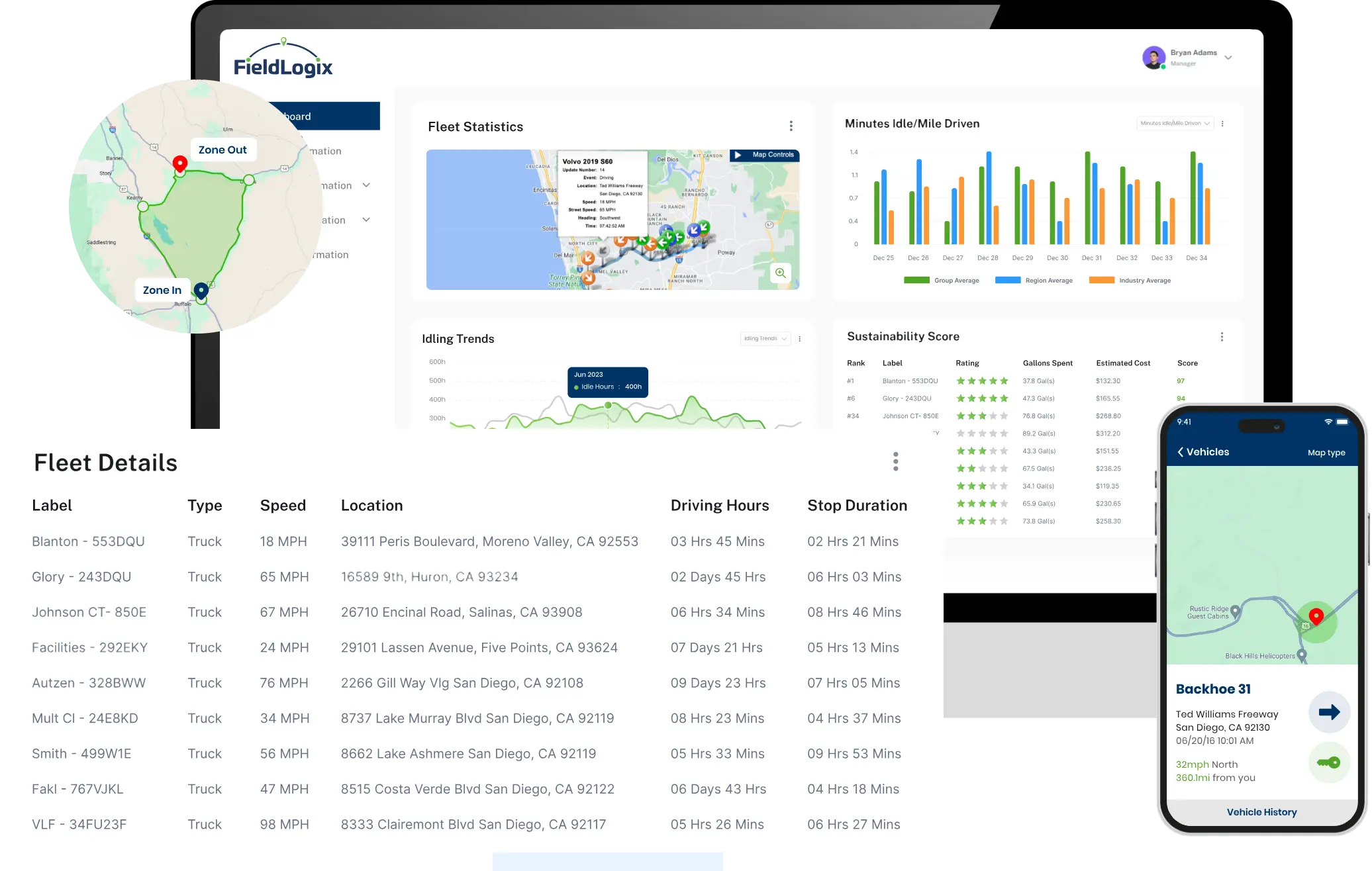
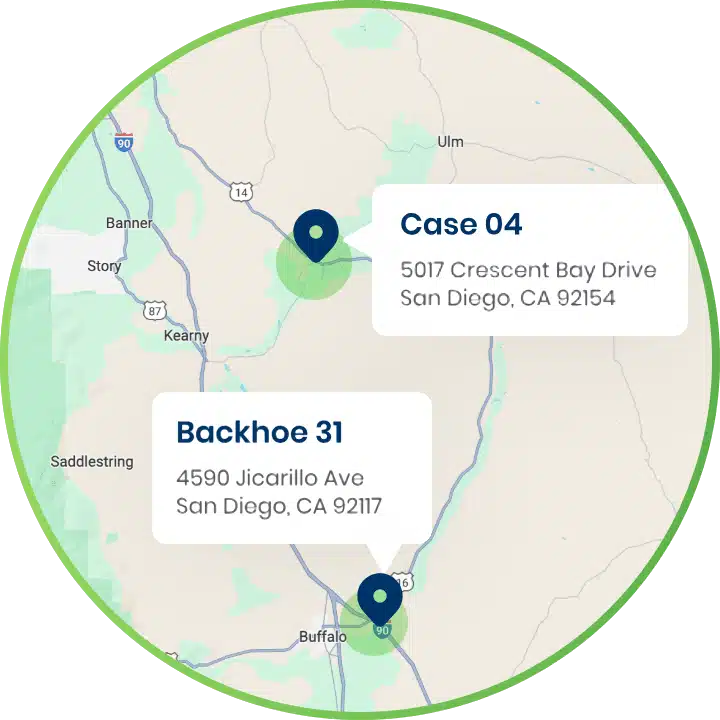
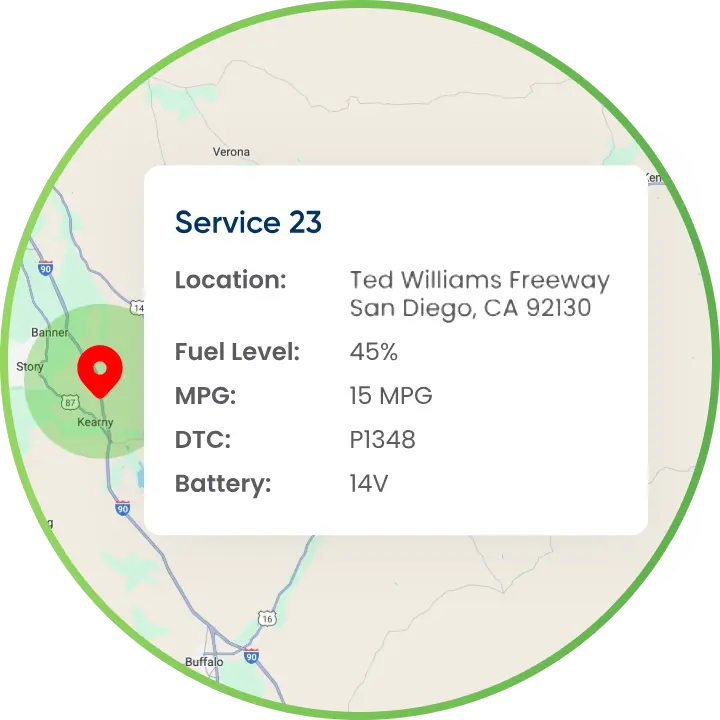
GPS tracking, or telematics, is the bedrock of your fleet intelligence system. A small telematics device, often plugged into the vehicle’s diagnostic port, becomes its voice. It transmits a constant stream of rich data: location, speed, mileage, engine hours, fuel consumption, and diagnostic trouble codes.
The market’s projected 25% increase in GPS adoption, specifically adoption of the more advanced AI-powered type of GPS devices, is more than a trend. Today’s widespread use of telematics represents a mass migration towards data-driven decision-making in fleet management.
The benefits of telematics implementation for fleet efficiency have become evident. This technology helps manage some of the most damaging issues, like unsafe driving practices, idling, wasted miles, and insufficient maintenance.
Risky Driving
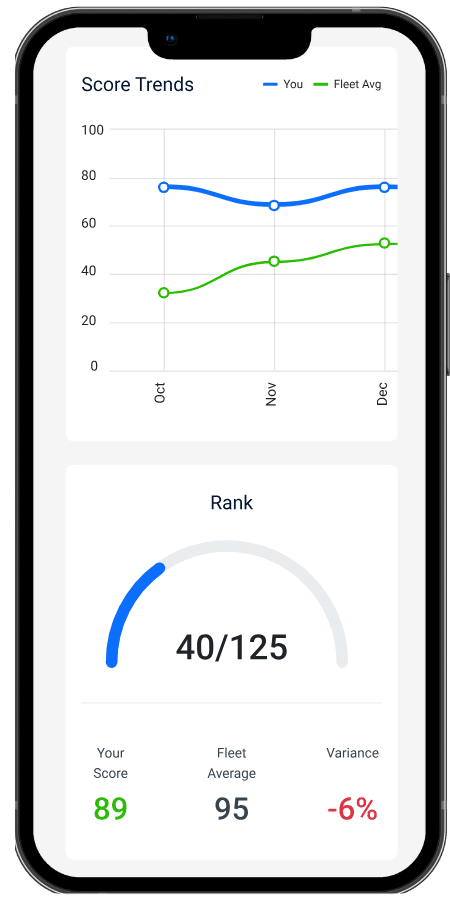
With GPS software, you can get instant, automated alerts for the specific behaviors that precede accidents: harsh braking, sudden acceleration, sharp cornering, and speeding. By being aware of the current driver behavior patterns in your fleet, you can move from generic safety meetings to data-backed coaching.
For example, instead of saying, “You need to drive safer,” you can say, “John, your scorecard shows 12 harsh braking events last month. Let’s look at the patterns and determine why they happened.”
This targeted approach is proven to work. Fleets utilizing telematics report an impressive 20% decrease in accidents.
Many insurance carriers also offer discounts of up to 15% for fleets that share this data, an ROI that sometimes pays for the system itself.
Excessive Idling
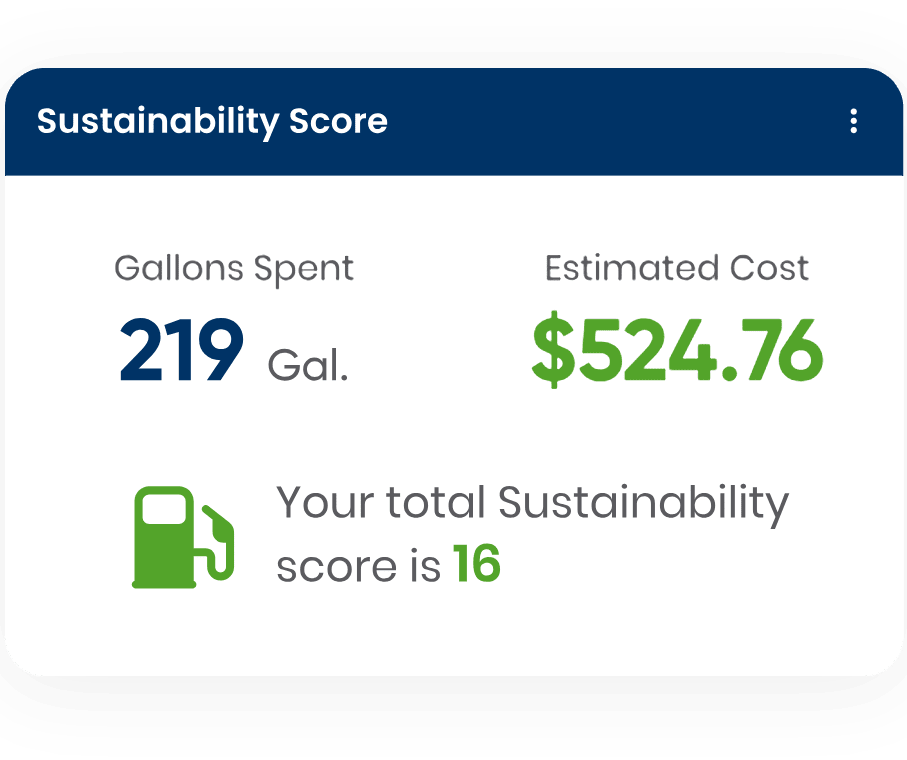
Idling is one of the most significant, yet most ignored, financial drains. An average truck burns nearly a gallon of fuel per hour while idling. At $4.00/gallon, a single truck idling for just 90 minutes a day costs your business $6. Over a five-day week, that’s $30. For a fleet of 20 trucks, that’s $600 of wasted fuel every week, or over $30,000 per year, vanished into thin air.
GPS tracking makes this waste impossible to ignore, allowing you to set idle-time thresholds and hold teams accountable.
Unauthorized Use & Wasted Miles
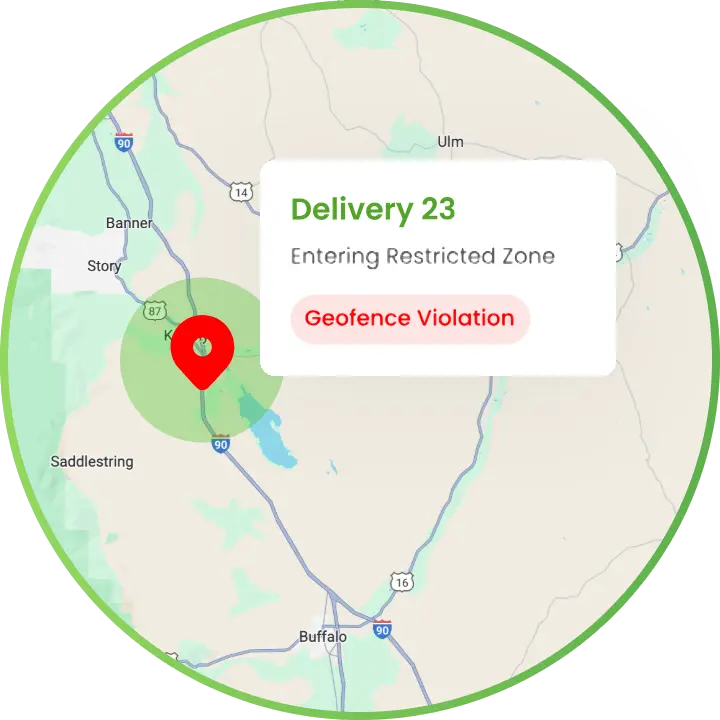
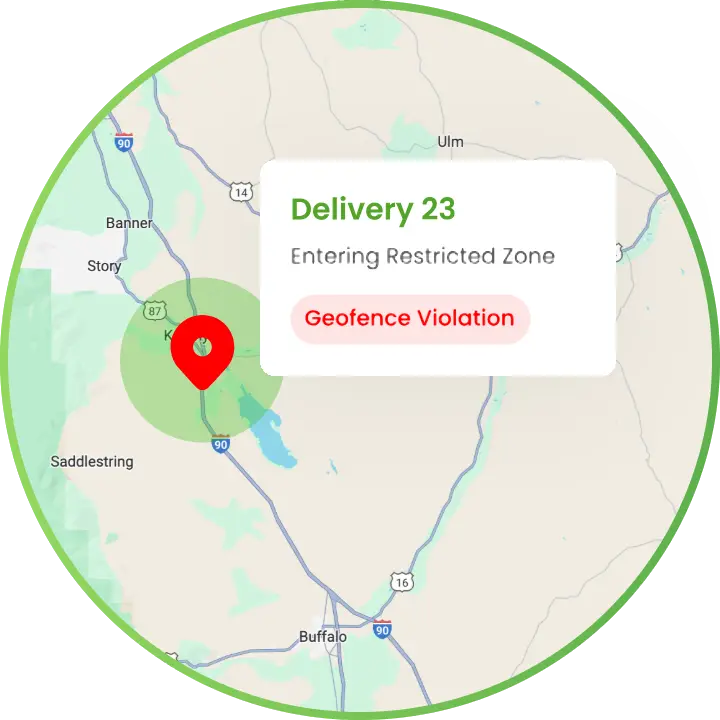
Geofencing is another powerful tool offered by telematics systems. It creates virtual boundaries around job sites, yards, or entire territories. You receive an immediate alert if a vehicle enters or exits a specified zone, or if it’s used after hours or on weekends without authorization. Taking advantage of geofencing, fleet managers can eradicate side jobs and personal errands on company time and fuel.
Furthermore, intelligent route optimization can cut fuel costs by 11% or more by simply ensuring drivers are on the most efficient path.
Proactive Maintenance
GPS also provides accurate, automated tracking of mileage and engine hours. This allows you to build a proactive and usage-based maintenance schedule. For example, the system can automatically send an alert to your maintenance team when Vehicle 104 is 200 miles away from its next scheduled oil change or when Vehicle 207’s engine has run for the requisite hours for its filter replacement.
Such an approach to maintenance helps shift from a fix-it-when-it-breaks model to a prevent-it-from-failing strategy. Proper maintenance scheduling opens up more opportunities for budget planning and minimizes the need for expensive emergency service.
Dash Cameras
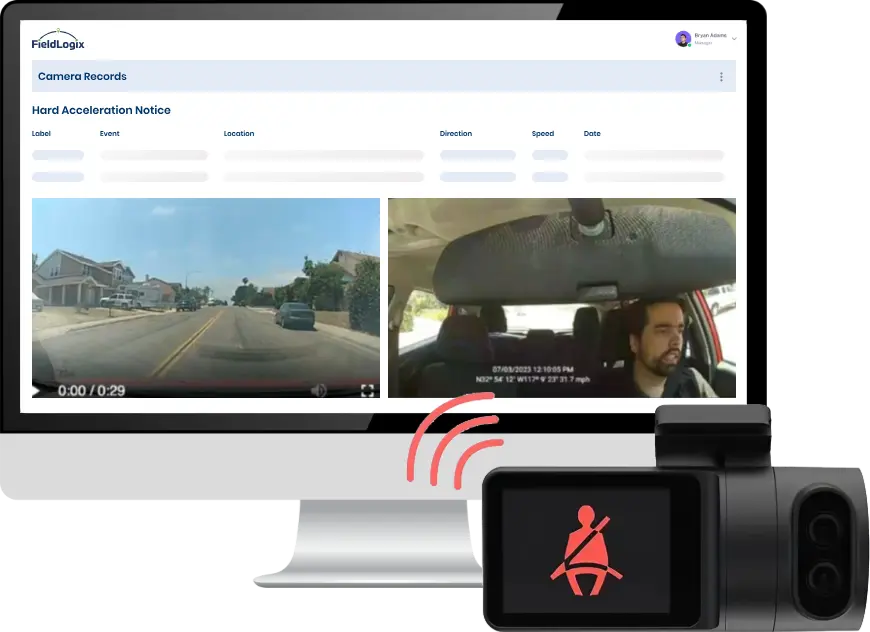
If GPS is the nervous system, dash cameras are the fleet’s all-seeing eyes and proactive brain. These are not just simple video recorders, especially with the new AI-powered models released into the market. Modern systems use dual-facing cameras (road and driver) and run sophisticated AI algorithms directly on the device.
This means the system analyzes video in real-time and only flags the critical 1% of events that require your attention. As a result, you are not being buried in irrelevant footage. You only get what you need to use as evidence, analyze accidents, and improve your driver coaching sessions.
Prevent Accidents
As the system detects the leading indicators of crashes in real-time, your drivers get an immediate, automated audio alert. These alerts can be for:
- Distracted driving. Cameras detect when a driver is looking at a cell phone, texting, or has their eyes off the road for an extended period of time.
- Drowsiness. The system can identify yawning, head-nodding, and prolonged eye-closing, prompting the driver to take a break before fatigue leads to a tragedy.
- Unsafe habits. Tailgating, rolling through a stop sign, or making an unsafe lane change can all trigger a gentle, in-the-moment reminder. This proactive coaching is revolutionary.
Fleets that implement video recording see up to a 52% reduction of safety-related accidents and a 59% reduction in the number of the most severe safety events.
Avoid Colossal Liabilities
In the litigious world we live in, a single accident can lead to a nuclear verdict that cripples a business. Imagine that a car cuts off your truck and brake-checks it, causing a rear-end collision. Without video, your commercial vehicle is almost automatically deemed at fault.
However, with a 10-second video clip, you have indisputable and timestamped proof that exonerates your driver and your company. This little clip can potentially save you hundreds of thousands of dollars and shield you against fraudulent claims and unfair liability.
Build a Library of Teachable Moments
Video clips of near-misses are invaluable and objective coaching tools. Reviewing a clip of a close call with a driver provides a concrete and unbiased basis for a conversation about defensive driving techniques. By recording each and every accident or close call, you build an extensive library that will help enrich your safety program and nourish a safer driving culture.
Routing & Dispatching Tools
A dedicated routing and dispatching tool solves the infamous Traveling Salesperson Problem for your fleet on a daily basis. The software’s sophisticated algorithm considers the best route to take in order to complete your jobs as efficiently as possible.
Based on the analysis, the software offers the most optimized routes instantly and contributes to a healthier and more efficient management of fleet assets.
Mileage, Labor & Fuel Management
This software does more than find the shortest path; it finds the smartest path. For example, by sequencing stops in a more intelligent way, it slashes drive time and fuel usage, impacting your two biggest variable costs. Such an efficiency gain means you can often complete more jobs with the same number of drivers and vehicles, or even reduce overtime hours.
Capacity Management
The real world is messy: A customer cancels, a vehicle has a mechanical issue, or a high-priority emergency job comes in. Manually re-routing your fleet in response is a chaotic nightmare of phone calls and guesswork.
On the other hand, with dynamic dispatching, you can re-optimize all routes for the fleet on the fly, slotting in the new job or re-assigning stops from the downed vehicle with minimal disruption.
Customer Service Management
Optimized routing leads to tighter delivery windows and more accurate ETAs. The best systems can even send automated SMS or email alerts to your customers when their service vehicle is on its way, complete with a link to track its progress.
This transparency ultimately improves the customer experience and reduces the number of inbound “Where is my driver?” calls that your office has to field.
Digital Vehicle Inspection Reports (DVIRs)
These stacks of often illegible carbon-copy inspection forms are a major liability. Critical information gets lost, reports are pencil-whipped, and a dangerous defect might not be seen by your mechanic for days. Digital Vehicle Inspection Reports move this process to a driver’s smartphone or tablet, forging an unbreakable link between your driver, your vehicle, and your shop.
Here are the three things you can do more effectively with DVIRs.
Manage Unplanned Downtime
Imagine the old way: a driver notes a slow tire leak on a paper form, which sits in the cab until the end of the day. The new way: a driver taps “Tires – Fail” on their app, takes a quick photo of the nail in the tire, and hits Submit. Your fleet maintenance manager gets these details right away.
Thus, a work order is created and assigned before the truck even returns to the yard. The tire can be repaired during off-hours, ensuring the vehicle is ready for its run the next morning. This is how you eliminate unplanned downtime.
Prevent Catastrophic Failure
That minor leak reported today is a simple hose replacement. Ignored for a week, it becomes a catastrophic brake failure on the highway, resulting in a dangerous accident, emergency repairs, towing fees, and a massive liability.
When you have the data from consistent digital inspections, which is readable and can be analyzed over time, you can spot trends, like a specific truck model that consistently has EGR valve issues after 80,000 miles. You can then move to predictive maintenance, replacing parts before they are known to fail.
Relieve Administrative & Compliance Burden
Just like in any other industry, a digital workflow eliminates the burden of chasing, collecting, and filing paper records. In the event of a DOT audit, you can produce a clean, complete, and searchable history of every inspection for every vehicle in seconds. Implementing DVIRs helps you pass with flying colors and avoid costly fines.
The Compounding ROI of an Integrated System
Adopting these four technologies doesn’t mean buying four separate products. Today, you can invest in a single, integrated ecosystem where the whole is far greater than the sum of its parts.
- GPS data showing excessive harsh braking events.
- Dash camera footage shows that the driver was looking down at their phone before the harsh braking event.
- Routing software eliminates the needs for drivers to search on their phone for driving directions while driving.
- DVIR’s that allow the drivers to report potential brake issues.
The compounding savings from reduced fuel consumption, lower insurance premiums, fewer accidents, maximized productivity, and eliminated downtime create an undeniable return on investment. The question is no longer, “Can we afford this technology?” It is, “How much longer can we afford to let our profits leak away every single day?”
Ready to stop the leaks and see what your fleet is capable of? Take a virtual tour of our platform to see how a modern fleet management system can transform your operations.
Frequently Asked Questions
What is fleet vehicle software?
Vehicle fleet software is a centralized digital platform that helps businesses manage, monitor, and optimize their operations. It integrates technologies like GPS tracking, AI video telematics, data analytics, and route optimization to provide fleet managers with a comprehensive, real-time view of their operations.
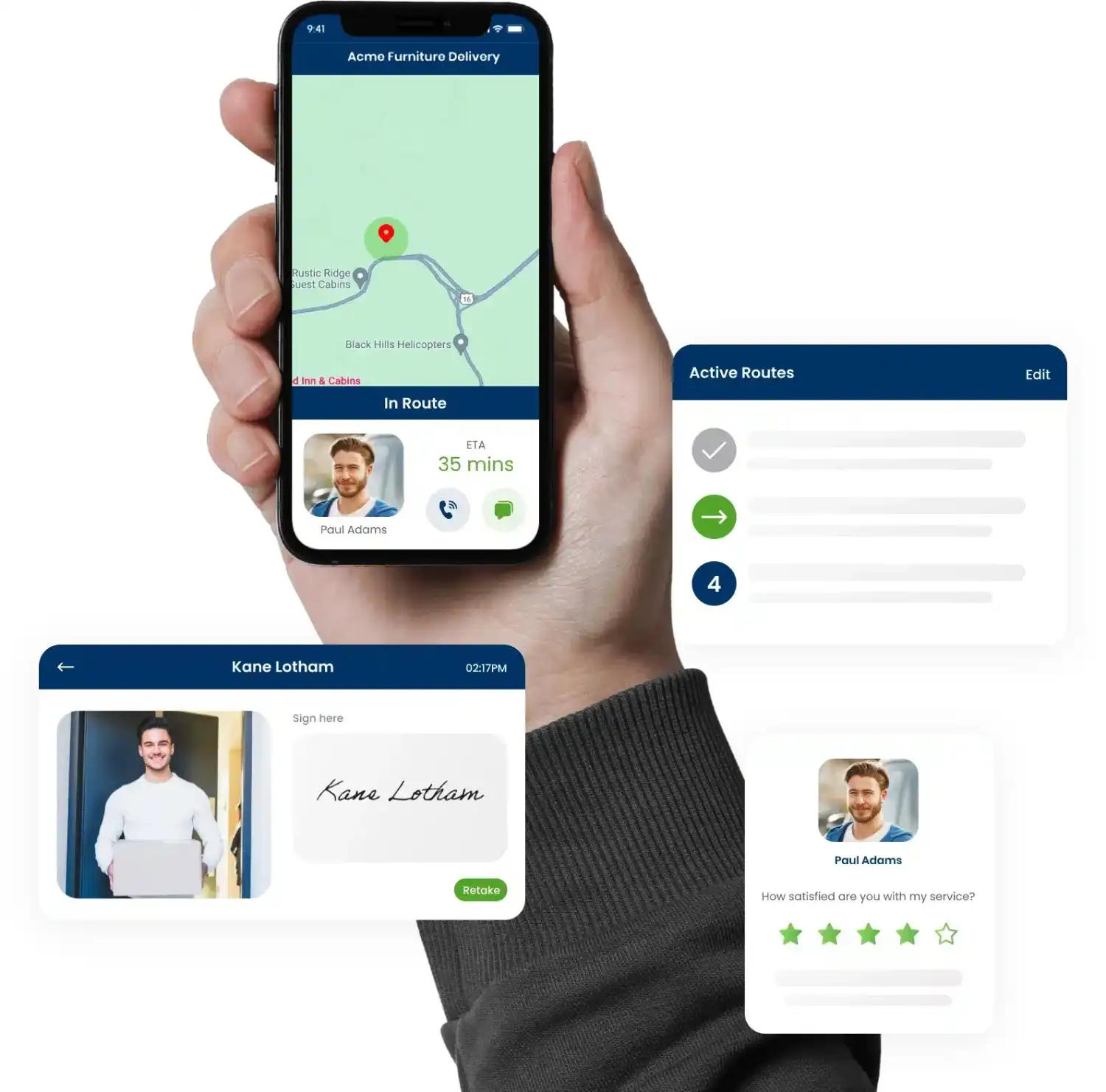
The best fleet management software includes a user-friendly mobile app for drivers and managers, so everyone across the organization is connected to the same source of truth.
What is fleet vehicle software used for?
A comprehensive fleet management system is used for a wide range of critical tasks aimed at improving efficiency, safety, and compliance. Key features and uses include:
- Monitoring real-time location, speed, and status to improve dispatching, security, and asset utilization.
- Monitoring fuel consumption, integrating with fuel card data, and identifying opportunities to improve fuel efficiency and detect potential fraud.
- Automating preventive maintenance schedules based on actual usage, tracking repair histories, and managing parts inventory to reduce vehicle downtime.
- Analyzing driver behavior data from telematics and AI dash cams to create targeted coaching programs and ensure adherence to safety protocols.
- Planning and executing the most efficient multi-stop routes to reduce mileage, fuel costs, and labor hours.
- Simplifying mandatory vehicle inspections and generating custom reports to track key metrics on fleet performance and vehicle health for audits and business intelligence.